
 Is It Japanese Knotweed?
Have you spotted Japanese knotweed on your property and are worried you may be breaking the law by doing so? Well, don't worry, because it IS NOT a criminal offence to have Japanese knotweed on your property.

Have you spotted Japanese knotweed on your property and are worried you may be breaking the law by doing so? Well, don't worry, because it IS NOT a criminal offence to have Japanese knotweed on your property.
During the autumn months, the majority of weeds and plants begin to die out and wilt with Japanese knotweed being no different. If you believe you have an infestation of knotweed on or near your property but are unsure and need confirmation, read on some tips on how to correctly identify Japanese knotweed in the autumn months.
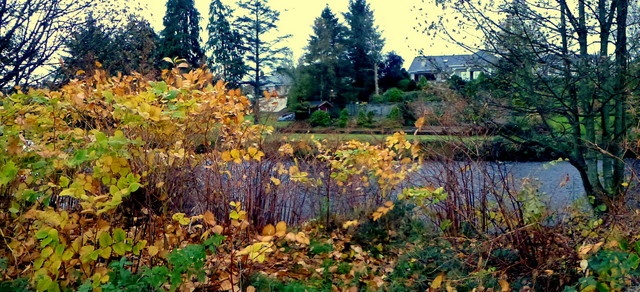
Photo by Kenneth Allen
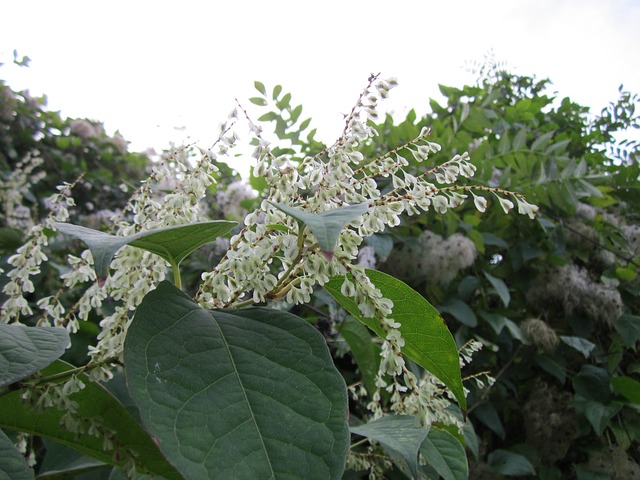
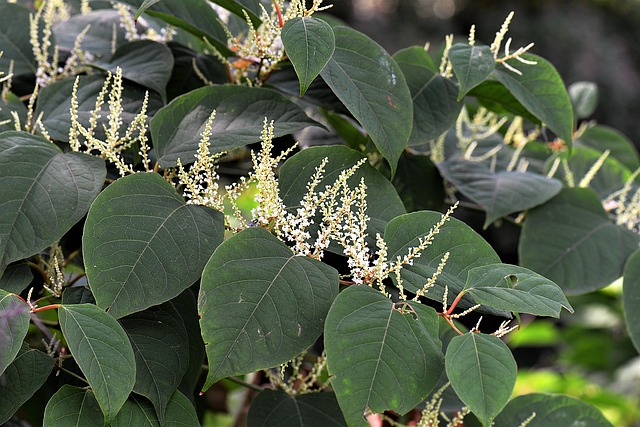
When trying to identify Japanese knotweed in autumn, there are a few things you should be on the lookout for:
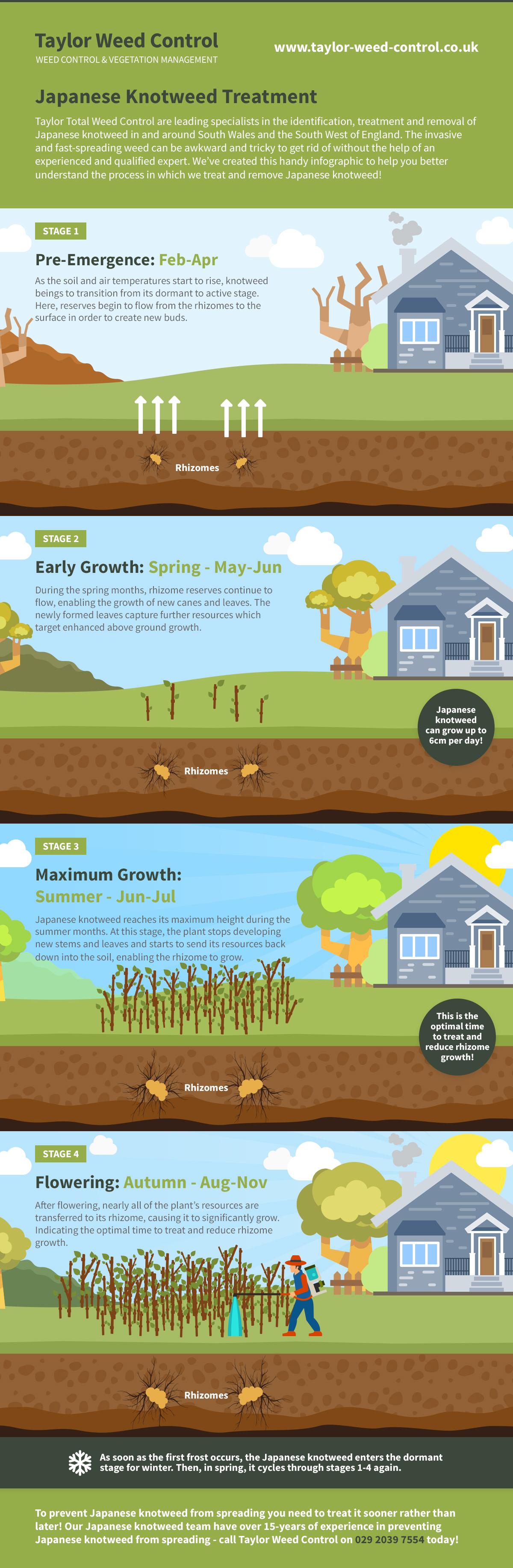
During the autumn months, Japanese knotweed will look similar to that in late summer, so shouldn't be too hard to identify. During these months, however, Japanese knotweed begins to flower where nearly all of the plant's resources are transferred to its rhizomes, causing it to grow significantly. This presents the optimal time to treat and reduce further rhizome growth.
If you're interested in how we work to treat Japanese knotweed during the autumn, take a look at our handy infographic below!
Do you require more information on Japanese knotweed during the autumn? Please feel free to get in touch with the Total Weed Control team today by filling out the form below - we'd be more than happy to help you out!
Japanese knotweed cropping up anywhere, especially near your home, can be a real cause for concern. If you spot Japanese knotweed on council or housing association land near your home, you need to make sure you report it as soon as possible.
We're sure you already know how quickly Japanese knotweed can spread, and it could show up on your land in only a few weeks if it's left unchecked! Ok, let's not panic too much. Here are the steps you should take to report Japanese knotweed on council or housing association land.
The first thing you should do is check out your local council's website. Some council websites have a section dedicated to Japanese knotweed, and you should be able to report the problem there. Failing that, you should be able to find their contact details so you can tell them about the Japanese knotweed over the phone or via email.
If Japanese knotweed is growing on your own property, it may be wise to contact an invasive weed expert before the problem gets any worse. Here at Total Weed Control, we offer a professional Japanese knotweed treatment service to help you get this plant under control.
Our experienced Japanese knotweed specialists can help homeowners to work with local councils and housing associations to get the plant treated to everybody's satisfaction. Get in touch with us to arrange a visit.
Any organisation, whether it's a local council or a housing association, are subject to the same Japanese knotweed laws. These laws state that allowing knotweed to spread from your land to someone else is illegal and can be prosecuted as a private nuisance.
If you've spotted Japanese knotweed on council land, get in touch with the council, then get in touch with us! We can help you get the problem under control quickly. If you have any questions, don't hesitate to contact Total Weed Control.
SHORT ANSWER: To kill Japanese knotweed, we recommend a three-year herbicide programme, followed by a two-year monitoring period to make sure it doesn't come back. However, we also offer excavation and removal if you need quick results.
Like old habits and Bruce Willis, Japanese knotweed dies hard. This invasive plant species is tough and versatile - it can grow in all sorts of different environments, and it's very difficult to destroy. Just when you think you've gotten rid of it once and for all, spring arrives, and those purple shoots emerge from the ground yet again.
Advice for anyone who's buying or selling a house, flat or commercial property that has Japanese knotweed within the property boundaries (or nearby)

The short answer: Yes, it's possible to get a mortgage on a property with Japanese knotweed present for those with an insurance-backed guarantee.
If you find out that you have Japanese knotweed on or near your property, don't panic - it's not the end of the world! Many people don't even know they have Japanese knotweed in their garden until they put the property on the market and the invasive weed is noticed by either the estate agent or building society surveyor.
