
 Is It Japanese Knotweed?
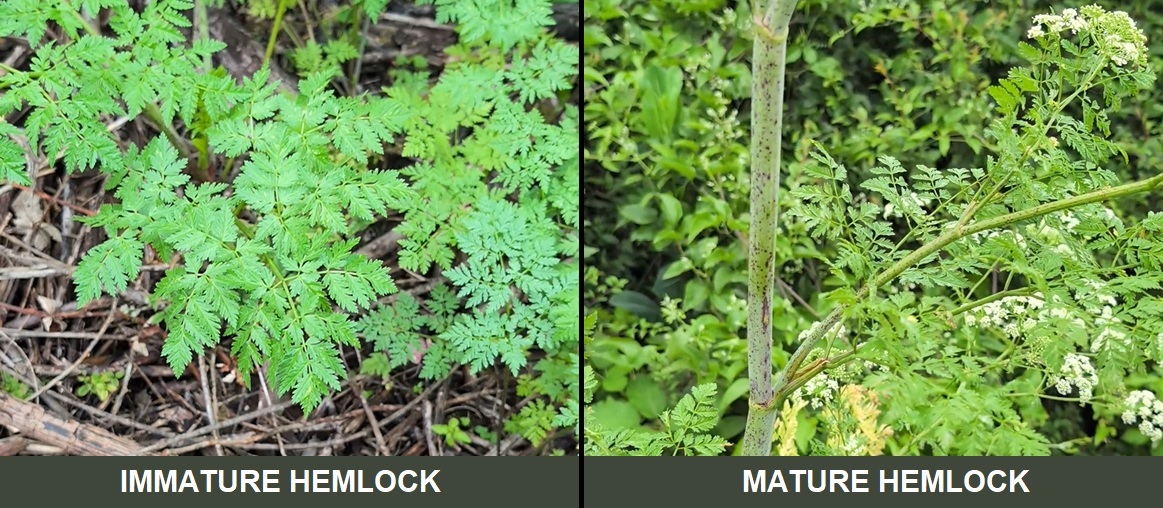
One of the world's best-known poisonous plants, hemlock is a common sight here in the UK. It can often be found in woodlands, hedgerows and open countryside.
To help you steer clear of this toxic customer, we've put together a handy hemlock identification guide. Read on for some useful info.
What Is Hemlock?
Hemlock (Conium maculatum) is a hardy plant that can live in a variety of environments. Every part of it is toxic when ingested, especially the seeds and the roots. Rather famously, the Ancient Greek philosopher Socrates was killed by hemlock poisoning.
Touching hemlock is unlikely to result in a severe skin reaction (since it doesn't have the same strong phototoxic properties as, say, giant hogweed), but it's still best to avoid handling hemlock with your bare hands as this increases your risk of accidental ingestion.
What Does Hemlock Look Like?
If you want to see what hemlock looks like, watch this video (featuring Robert from Total Weed Control) to see examples of both immature and mature hemlock plants.
Hemlock prefers damp conditions for growing, so it's unlikely (though not impossible) that you will encounter it in your back garden. In Britain, hemlock is more usually seen by roadsides or on waste ground, along the edges of fields and meadows, or in poorly-drained soil near streams and ditches.
Hemlock can be identified by the following features:
- White flowers. Mature hemlock plants have umbrella-like clusters of tiny white flowers, known as 'umbels'.
- Speckled stems. Hemlock stems are smooth, green, hairless, and speckled with purple or red spots and streaks.
- Fern-like leaves. Hemlock's leaves have a triangular, fern-like appearance.
- Height. A mature hemlock plant can be well over 2 metres tall, sometimes closer to 3 metres!
The height in particular is a big giveaway when trying to differentiate hemlock from similar plants, like cow parsley, which tops out at around 6 feet (1.8 metres). Both plants are classed as umbellifers, named after those 'umbels' of white flowers, but hemlock is the tallest umbellifer in the UK.
Another well-known umbellifer, giant hogweed, has coarse white hairs on its stems, as opposed to the smooth and hairless stems of hemlock.
How to Remove Hemlock Safely
Although you can get rid of hemlock by yourself, we strongly urge you to contact a weed control specialist instead. We offer weed clearance services here at Total Weed Control if you are concerned about hemlock on your property.
If you have any questions about our services, or about any of the weeds that might be growing on your property, please get in touch and we'll do our best to help.
