Worried about Japanese knotweed? Book a site survey and we’ll send an invasive weed specialist to take a look.
Knotweed Survey
call us today on 01639 710914

who can remove Japanese knotweed

Removing Japanese knotweed is not a task that should be undertaken lightly. Japanese knotweed is a fierce and unrelenting invasive species that can re-emerge from tiny particles left in the soil. For that reason, it's important that you only employ trained Japanese knotweed technicians to treat your infestation. Working with the right people, who will do a good job of killing and removing Japanese knotweed will save you time, money and heartache.

Who is responsible for treating Japanese knotweed?

The primary legislation for Japanese knotweed is 'section 14(2) of the Wildlife and Countryside Act 1981’. This states that the person who owns the land with the Japanese knotweed infestation is responsible for preventing the spread onto neighbouring lands. It's not actually a legal obligation for you to remove the offending knotweed, however, left untreated, it will no doubt cause problems for you and neighbours later down the line. The best course of action is to have Japanese knotweed treated and removed professionally as soon as you identify it!

What's involved when treating Japanese knotweed?

Japanese knotweed can be treated in a few different ways. Most often, it's sprayed with a mixture of specialist chemicals which kills the plant above ground and the roots below ground. Then, the soil is excavated to remove any trace of knotweed.

Guidelines set out by the government suggest that anyone wanting to use specialist chemicals to treat Japanese knotweed must do the following:

  • Make sure anyone spraying holds a certificate of competence for herbicide use or works under the direct supervision of a certificate holder.
  • Carry out a Control of Substances Hazardous to Health assessment.
  • Get permission from Natural England if the area is protected.
  • Get permission from the Environment Agency if the plants are near water.

Choose companies with accreditations

If you're not sure who can remove Japanese knotweed and who can't, we'd recommend getting in touch with a professional Japanese knotweed removal company (like ourselves). Companies that specialise in Japanese knotweed removal are likely to have a number of accreditations that show they are competent in handling & removing this invasive species. 

Here at Total Weed Control, we have a number of Japanese knotweed accreditations including:

  • PCA certification - which shows we follow strict standards and offer a high level of technical knowledge and skills.
  • Environmental Agency - we work alongside the environmental agency to ensure that all of our 'land waste' is disposed of properly.

Take a look at our full list of accreditations here.

Professional knotweed removal service

Looking for professional Japanese knotweed removal? Look no further. We have a team of technicians who can all remove Japanese knotweed efficiently. We've been dealing with Japanese knotweed across South Wales and South West England for several years, so we're sure we can tackle your infestation. Don't waste your time with cowboy knotweed removers, stick to people who can remove Japanese knotweed properly.

Japanese Knotweed Removal >

If you have any questions about our Japanese knotweed services, or if you'd like to book a consultation, give us a call on 029 2039 7554. We look forward to hearing from you!

Read More: Do You Need a Licence to Remove Japanese Knotweed?

Japanese knotweed can cause a lot of problems on your property so it's important you can identify it all year round! Now that we're moving into spring, you'll probably notice a lot of different plants emerging in your garden, so it's important to keep your eye out for Japanese knotweed. Left untreated, Japanese knotweed can damage your property and can even prevent you from selling your home. 
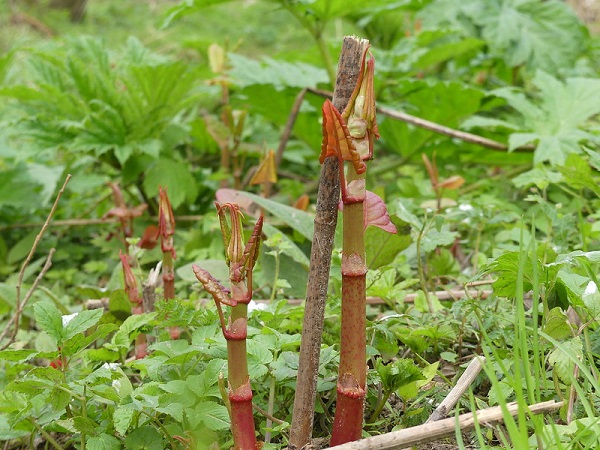
what does japanese knotweed look like in spring

Image source: Scottish Invasive Species Initiative (Flickr)

Knowing what Japanese knotweed looks like in the spring can help you save money on treatment, repairs, and lawsuits! That's right, people have been known to sue their neighbors if Japanese knotweed has been allowed to invade their property, so spotting and treating it early is a must!

Read More: What to do if your neighbour has knotweed

Japanese knotweed appears in spring

Most people see Japanese knotweed appear in the garden for the first time during spring. Like all plants, Japanese knotweed grows new shoots that grow up through the soil when the weather starts to get warmer. 
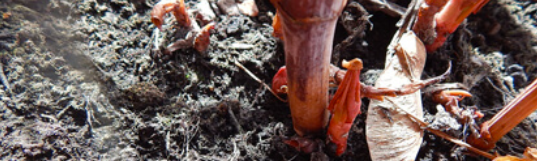
Japanese knotweed in spring

Initially, Japanese knotweed spears will appear. They're red/purple in colour and look very similar to asparagus, with a woody stem and a pointed tip. During spring, the leaves of the Japanese knotweed plant are curled up (they're still very young at this point). 

By the end of spring, these small canes can be up to 3 metres high! Japanese knotweed grows quickly, which is another reason why you should keep your eye out for it during spring. 

Japanese knotweed in summer

If by chance, you don't notice the Japanese knotweed in your garden in summer, you might have a chance to spot it in summer before it spreads too far!

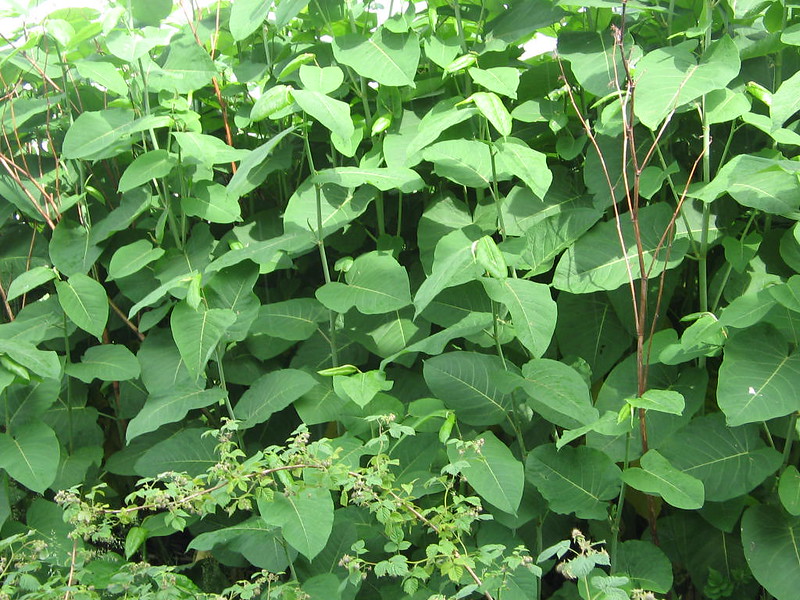
During summer, Japanese knotweed has a lot more foliage, it appears green and leafy with only a few speckles of red/purple left on the stem.

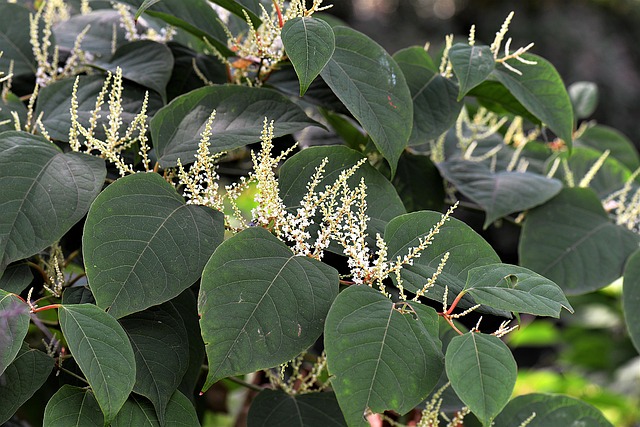
When Japanese knotweed eventually flowers, it has small creamy white flowers, which ironically, are quite pretty. Unfortunately, these little white flowers are a sign of an underlying problem that needs to be dealt with quickly. 

Head to our Japanese knotweed Identification page for more information!

Japanese Knotweed Identification >

Remember to check the plants in your garden regularly during spring and summer. If you spot anything that looks like Japanese knotweed, you should get it checked by Japanese knotweed specialists immediately. Contact us for a Japanese knotweed survey now!

Get In Touch >

Property tax

Chancellor Rishi Sunak today confirmed that the stamp duty holiday for home buyers in England and Northern Ireland - previously slated to end on 31 March - will be extended for another three months.

More...

Japanese knotweed

First introduced to the UK in the 19th century, Japanese knotweed has become a widespread issue for many people across the country. Brought here from Asia as an ornamental plant and cattle fodder, knotweed was reported as a garden escape in the late 19th century which eventually naturalised populations in the early 20th century. Fast forward to the present day and knotweed can be found all over the UK, causing tremendous amounts of structural and environmental damage across many cities and towns.

So, where does Japanese knotweed grow and where are the areas that you're most likely to find it? Read on to find out!

More...


A homeowner from London has claimed nearly £30,000 after Japanese knotweed, the invasive plant introduced to the UK in the mid1800's, encroached onto their property from one of their neighbours. Knotweed has a long history of devaluing homes up and down the country as a result of its deep, fast-growing root system damaging surrounding land.

More...

Contact Taylor Weed Control

Name *
E-mail address *
Location *
Telephone Number *
Your Message
 
Security Character Security Character Security Character Security Character Security Character Security Character
Enter Letters (No Spaces) *
Security Character Security Character Security Character Security Character Security Character Security Character