Worried about Japanese knotweed? Book a site survey and we’ll send an invasive weed specialist to take a look.
Total Weed Control
call us today on 01639 710914

Tag: japanese-knotweed-removal


Goat with grass in its mouth - can you eat japanese knotweed? Is japanese knotweed edible?


As many British homeowners are sadly aware, Japanese knotweed is an invasive plant species that's strong enough to grow through concrete and cause significant damage to buildings and roads.

For this reason, the presence of Japanese knotweed can reduce a property's value by as much as 20% - it's notoriously difficult to sell a house with Japanese knotweed, and getting rid of it often takes multiple applications of herbicide over a number of months.

Wouldn't it be nice if there were a species of animal willing to eat our Japanese knotweed problems away?

Japanese knotweed plant

Japanese knotweed is known for causing havoc in gardens across England and Wales. This aggressive invasive species spreads fast and can cause structural damage to homes and buildings. Its presence may even decrease the value of your home or discourage mortgage companies from lending to you, so it is vital that you tackle the issue properly.


What is Japanese knotweed?

Japanese knotweed is a strong and fast-spreading perennial plant. While not native to the UK, it can be found in numerous locations throughout the country. It spreads quickly due to its aggressive rhizome root system - these rhizomes can grow up to 4 metres deep, meaning they require treatment and disposal by specialist teams to remove the plant.

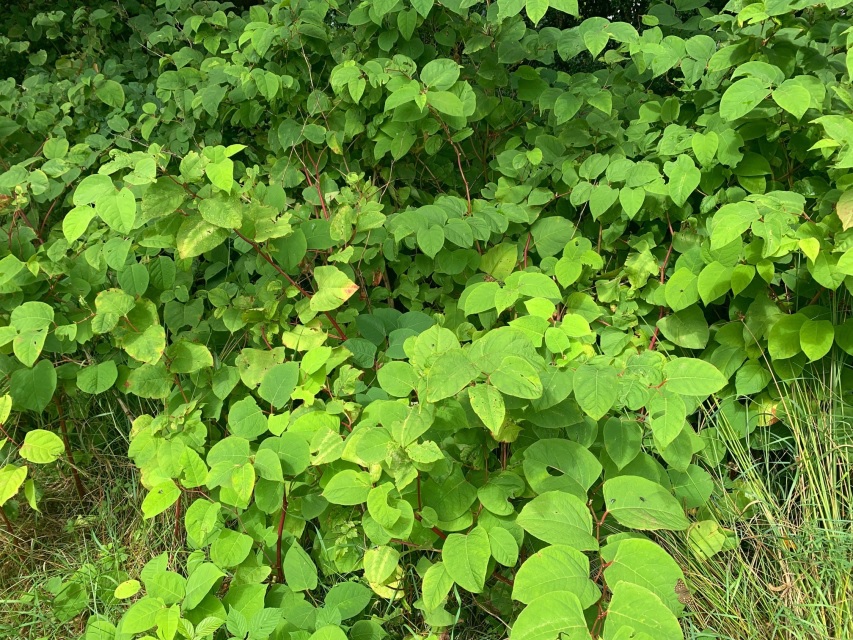
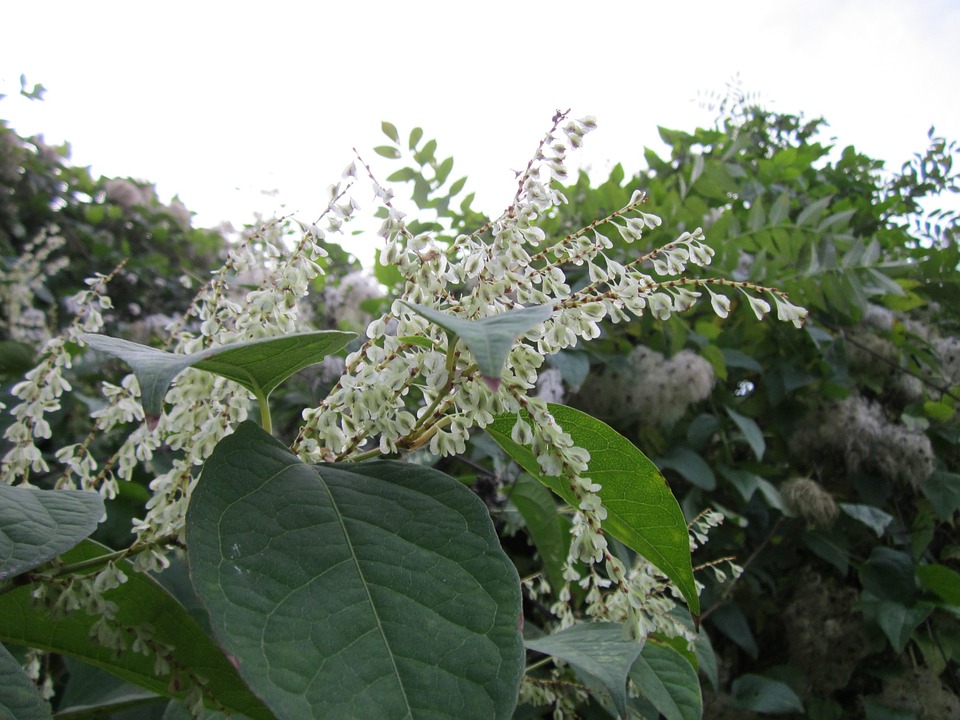
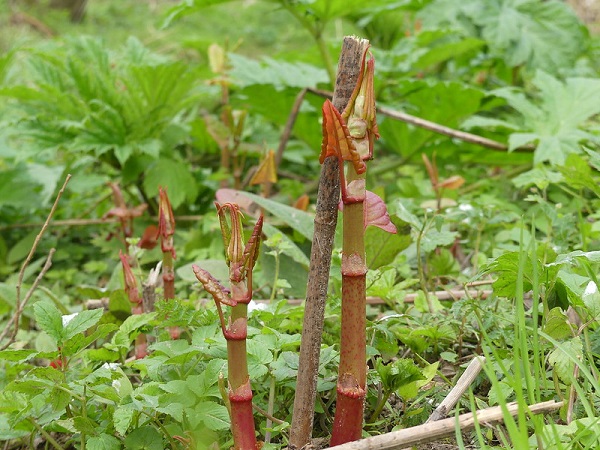
Japanese knotweed can look very similar to other decorative plants, so be sure to read our Japanese knotweed identification guide and learn what to look out for in your garden.


Who is responsible for removing Japanese knotweed?

In England and Wales, it is a criminal offence to encourage the growth of Japanese knotweed or allow it to spread. Clearing the weeds as soon as possible is key if you don't want to damage to your property or run into legal trouble.

If Japanese knotweed is on your property, it is your responsibility to organise its removal. The plant can be cleared via excavation or through a herbicide treatment. It is strongly recommended that you arrange this with a professional, qualified specialist, as there are many regulations governing how to dispose of Japanese knotweed.

If there is Japanese knotweed in a neighbour's garden, you should discuss this with them if possible. It is not a crime to have Japanese knotweed on your property; however, if the knotweed spreads to your land, you may be able to take legal action against your neighbour for creating a nuisance.

In 2014, a law was introduced allowing local governments to penalise people for not taking adequate steps to eradicate Japanese knotweed. Talk to your local council's environmental team, who will have the authority to encourage your neighbour to address the problem if necessary.

Read More: What to Do If Your Neighbour Has Japanese Knotweed


I'm renting a property - is it my landlord's responsibility to get rid of Japanese knotweed?

Check your contract to see whether you are responsible for the removal of Japanese knotweed. Some landlords may put clauses into contracts that agree the tenant is responsible for removing invasive plant species. They may assist you with the task due to the aggressive nature of the plant and the potential damage to their property.

Once you have figured out who needs to clear the weed, it is time to act. Total Weed Control's Japanese knotweed treatment plans are very reasonably priced, making tackling this problem easy and affordable compared to other weed removal specialists. Our team of technicians will be able to assess the extent of the damage and best advise you on how to address the issue with a free survey.

Call us today on 029 2039 7554 to arrange a free weed removal consultation, or get in touch for more help and advice on clearing Japanese knotweed.

Request a Free Japanese Knotweed Survey >

Do You Need a License to Remove Japanese Knotweed?

If you have spotted Japanese knotweed on or near your property and are wondering if you need a licence to remove it – in short, no you don't.

The legal standing surrounding Japanese knotweed across the UK varies. In England and Wales, the primary legislation relating to knotweed is ‘Section 14(2) of the Wildlife and Countryside Act 1981’. In Scotland, this is still the predominant piece of legislation but in effect has been superseded by the changes which came into force with the ‘Wildlife and Natural Environment (Scotland) Act 2012’. The law surrounding the management and control of knotweed across the UK, however, is practically the same.

Japanese knotweed is categorised as an invasive species, and it is the responsibility of the owner of the land where it appears to prevent it from spreading into neighbouring properties or into the wild. The removal of Japanese knotweed must also be performed with extreme due care and attention due to the sensitivity regarding its ability to spread. Currently, there is no legal obligation to remove or treat knotweed, just as long as you’re not encouraging or allow it to grow.

Guidelines set out by the government state that anyone wanting to use chemicals to treat an infestation of knotweed must do the some or all of the following:

  • Make sure anyone spraying holds a certificate of competence for herbicide use or works under the direct supervision of a certificate holder

  • Carry out a Control of Substances Hazardous to Health assessment

  • Get permission from Natural England if the area is protected, for example, sites of special scientific interest

  • Get permission from the Environment Agency if the plants are near water

The use of pesticides and chemicals in treating Japanese knotweed is governed by ‘The Control of Pesticides Regulations 1986’ and required any person who uses a pesticide to take all reasonable precautions to protect the health of human beings, creatures and plants. Once knotweed has been treated with chemicals, it will have to be disposed of in the correct way. Off-site disposals fall under the ‘Environmental Protection Act 1990’, which states disposing of Japanese knotweed must be conducted by a licensed waste carrier as stated in ‘Waste Regulations 2011’ and disposed of within a licensed facility. Relevant transfer notes must be completed and stored. If knotweed has not been treated before off-side disposal and simply removed, then it is not classed as hazardous waste. If certain pesticides have been used, however, then the waste moves into the hazardous category requiring a consignment note as set out in the ‘Hazardous Waste Regulations 2005’.

In 2013, the UK government stated that any person that fails to control Japanese knotweed along with other invasive weed could receive an anti-social behaviour order. On-the-spot fines of £100 can also be issued, potentially rising to £2500 if prosecuted. Companies also face fines of up to £20,000 if prosecuted

Professional Knotweed Removal

It is highly recommended that, if you have Japanese knotweed on or near your property, you use experienced professionals who know what they’re doing. If not, you risk allowing the knotweed’s rhizomes spreading even further, causing not only potential increases in damage later on in time but prosecution for facilitating the spread of knotweed. So, to avoid any of these issues, be sure to get in touch with the team here at Total Weed Control! Our Japanese knotweed specialist can identify and confirm the presence of knotweed on your property and devise a relevant plan of removal to ensure it is properly eradicated. You can learn more about our knotweed removal services below.

Japanese Knotweed Removal >

If you have any questions regarding our Japanese knotweed treatment or removal, then please do not hesitate to get in touch with us today!

Japanese Knotweed History

Japanese knotweed is one of the most - if not the most - invasive plant in Britain. As its name suggests, Japanese knotweed is native to Japan, where it is known as “itadori”. One interpretation of this name is ‘remove pain’ which alludes to the plant’s painkilling properties and use in various medicines to treat a variety of ailments ranging from cardiovascular diseases, fungal infections and skin inflammations.

Knotweed can also be found in other parts of Asia, such as China, Taiwan, and areas of Korea. In Japan, knotweed grows freely on mountainsides, volcanoes, and open spaces, which is a little different compared to the UK. In Japan, knotweed has natural predators that come in the form of invertebrates, fungi, ash deposits from volcanoes, and an erratic climate. In Britain, however, there are no natural predators to limit the spread of knotweed.

The history of Japanese knotweed is not as simple as you may think. How did it get here in the first place? Why did it spread so vigorously? And why is it such a problem today? 

In this blog post, we take a deep dive into the history of Japanese knotweed to find some answers to the many questions surrounding this pesky plant.

japanes knotweed house prices

A housing estate in Sturrocks in Basildon could see the value of its properties take a notable hit following the increasing growth of Japanese knotweed in the area.



Effects of Japanese Knotweed on House Price

Japanese knotweed has a dark and storied history in the property industry and is commonly vilified in the media as a fiendish and fearful infestation – and rightfully so.

The mere presence of the invasive plant can have a decidedly negative influence on house prices and, if left untreated, the knotty vine even has the potential to inhibit the structural integrity of the property.

As such, quick action is necessary and it's recommended that treatment begins as soon as a Japanese knotweed infestation is discovered. Sadly, such recommendation was not followed by Basildon Council…


Deaf Ears

Despite reporting the presence of Japanese knotweed to the local council for six months, residents of Basildon’s Vange estate have had to stand idly by and watch the growing problem escalate as their pleas have fallen on deaf ears.

 “It’s disgusting that the council isn’t dealing with this”, said local resident Caroline Baxter. “We all pay our rates and shouldn’t have to deal with this going on here.”

Another inhabitant of the area, Barry Jones, also took aim at the council with his remarks:

“I think the council needs to get its act together and fix this issue. If they had done something about it then, it would have been gone by now.

“I will be so angry if the plant damages my garden and or home. If it’s left too long the whole estate will be covered in it.”


Delayed Reactions

Mr Jones also went on to highlight the safety hazards that knotweed brings to the area, noting that “people have suffered burns and blisters from the plant in the past”.

Commenting on the situation, a spokesperson for the local council had this response:

“We recently identified a case of Japanese Knotweed in Sturrocks and it was added to our contractors spraying list and has had its first spray.”

However, with a six-month head-start, have the council left it too late to nip this issue in the bud? One thing is for sure, they have definitely not made their job any easier.


Japanese Knotweed Treatment

As we touched on earlier, the sooner you address the problem, the quicker you will overcome it. As such, early diagnosis and early treatment is a vital part of the process and can be the difference between widespread problems and wholesale relief.

You notice a Japanese knotweed issue on your property, a neighbouring property or in the locale, it’s well worth getting it checked out. As seen in this instance, the council have a habit of dragging their feet and the issue is only likely to get a whole lot worse.

At Total Weed Control, we are fully equipped to tackle your knotweed nuisance once and for all and can quickly and efficiently banish your Eastern enemy from whence it came. All it takes is a phone call!


For more information on Japanese knotweed treatment from Total Weed Control, why not drop us a line? Call now on 029 2039 7554 to speak with one of our experts or get in touch online to request a FREE knotweed survey today.

Request a FREE Survey