It is agreed amongst professionals and experts that the invasive plant Japanese knotweed can cause problems to homes and properties as a result of its ability to grow and spread at an alarming rate. But can Japanese knotweed cause subsidence? Total Weed Control is here to help you find out!
Before we can look into whether knotweed can cause subsidence, we must first try to understand what subsidence means. According to the Cambridge Dictionary, the term subsidence means 'the process by which land or buildings sink to a lower level'. Therefore, the understanding is whether Japanese knotweed possesses the ability to cause lands or buildings to sink, leading to extreme structural damage.
Many varying opinions exist on this topic, with some arguing that knotweed does cause subsidence and some arguing that it doesn't. We're here to offer our professional opinion on the matter to try and answer the questions as best we can as well as letting you know how Total Weed Control can help if you've spotted knotweed on or near your property and are worried about the potential damage it can cause.
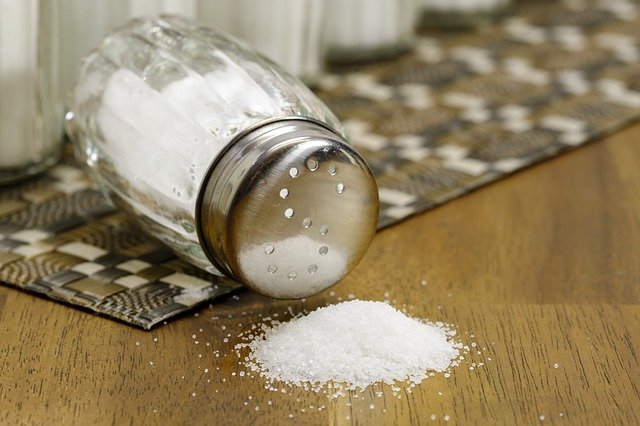
Salt is very versatile - it can make virtually any meal taste better - but sadly, there are some problems that salt can't solve.
You may have heard that salt can be used to kill garden weeds, and there is some truth to that. Applying salt to an unwanted plant can cause the plant to dehydrate and ultimately die.
But should you actually try this? The RHS don't recommend it: "The use of bleach or salt to kill weed on paths and drives is strongly discouraged, as this can cause pollution and damage plants."
Besides, Japanese knotweed is no run-of-the-mill garden weed. It takes a lot to eradicate this invasive species once and for all - a mere sprinkling of salt just won't do it!
Like an unwanted house guest, Japanese knotweed can be difficult to get rid of. Patience and persistence are key to getting the job done properly.
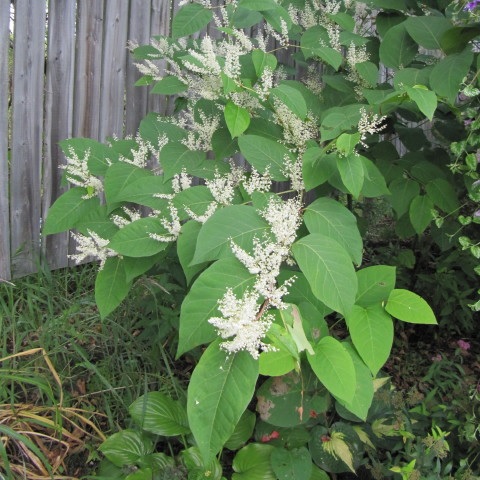
Photo by Leonora Enking (View Original)
As we discussed in our blog about Japanese knotweed's growing cycle, this invasive species may appear to die off completely during the winter months. But appearances can be deceptive.
For reasons discussed in our DIY Japanese Knotweed Removal blog post, we DO NOT RECOMMEND attempting to get rid of Japanese knotweed on your own. Instead, get in touch with a specialist contractor who knows how to deal with this invasive species and ensure that it does not spread elsewhere.
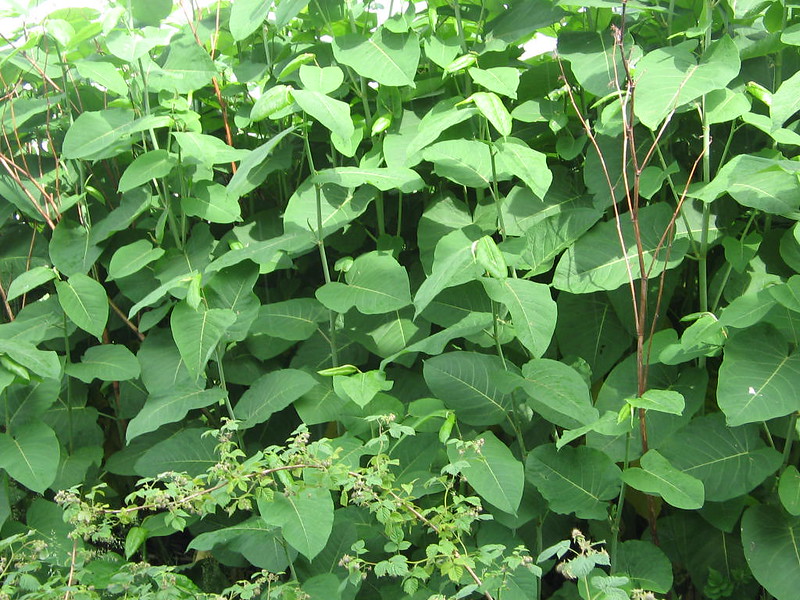
Photo by dankogreen (Flickr)
If you're found your way to this blog, you're likely wondering how to kill Japanese knotweed. Broadly speaking, there are two ways to kill Japanese knotweed:
- Herbicides - spraying the plant with glyphosate weed killer
- Excavation - digging the plant up and either burying it or safely disposing of it at an approved landfill site
We usually treat Japanese knotweed by spraying the leaves with herbicides. A typical knotweed treatment programme consists of multiple herbicide applications over a period of 3 years, followed by a 2-year monitoring period to ensure that the problem is under control.
If time is of the essence, excavation is a quicker (but more expensive) alternative to the above. Heavy excavation machinery is used to dig up the affected area; this may be combined with spraying for optimum results.
Learn more about our Japanese knotweed treatment plans

 Is It Japanese Knotweed?
