Worried about Japanese knotweed? Book a site survey and we’ll send an invasive weed specialist to take a look.
Total Weed Control
call us today on 01639 710914

Category: Japanese Knotweed


Goat with grass in its mouth - can you eat japanese knotweed? Is japanese knotweed edible?


As many British homeowners are sadly aware, Japanese knotweed is an invasive plant species that's strong enough to grow through concrete and cause significant damage to buildings and roads.

For this reason, the presence of Japanese knotweed can reduce a property's value by as much as 20% - it's notoriously difficult to sell a house with Japanese knotweed, and getting rid of it often takes multiple applications of herbicide over a number of months.

Wouldn't it be nice if there were a species of animal willing to eat our Japanese knotweed problems away?

Japanese knotweed

Finding Japanese knotweed in your garden may fill you with dread - especially if you've read all those horror stories about the damage this invasive species can cause and the effect it can have on property values.

But don't panic! There are steps you can take to halt the spread of Japanese knotweed and limit its impact on your home.

Caerphilly Castle in South Wales

South Wales is one of the UK's worst-affected areas for Japanese knotweed growth.

That's according to an article published in YourMoney.com, which names South Wales alongside the likes of Bolton, Bristol and London.

These are apparently the places where this invasive species is at its most prolific.

Our Japanese Knotweed Removal Service >


Which parts of South Wales have the most Japanese knotweed?

According to a Wales Online article originally published in July 2019, the locations in South Wales with most Japanese knotweed infestations were:

  • Llanelli
  • Caerphilly
  • Swansea

That said, it was Conwy - in North Wales - that topped the Wales Online list in 2019, with a jaw-dropping 395 cases within a radius of just 4 kilometres.


What should I do if I find Japanese knotweed on my property?

First of all, make sure it actually is Japanese knotweed. There are several similar-looking plants that may be mistaken for knotweed at a glance - visit our Japanese Knotweed Identification page for advice.

If you do have Japanese knotweed on your property, WE STRONGLY RECOMMEND SEEKING EXPERT ADVICE instead of attempting to get rid of it on your own. Japanese knotweed has a 'rhizome' root system, and a tiny fragment of one root can turn into a whole new plant. (This should give you a pretty good idea how the plant became such a widespread problem in this country.)

Read More: How Do You Get Rid of Japanese Knotweed?

If you are worried about Japanese knotweed, please feel free to get in touch with Total Weed Control and request a FREE knotweed survey.

Photo from Pixabay

Japanese knotweed plant

Japanese knotweed is known for causing havoc in gardens across England and Wales. This aggressive invasive species spreads fast and can cause structural damage to homes and buildings. Its presence may even decrease the value of your home or discourage mortgage companies from lending to you, so it is vital that you tackle the issue properly.


What is Japanese knotweed?

Japanese knotweed is a strong and fast-spreading perennial plant. While not native to the UK, it can be found in numerous locations throughout the country. It spreads quickly due to its aggressive rhizome root system - these rhizomes can grow up to 4 metres deep, meaning they require treatment and disposal by specialist teams to remove the plant.

Japanese knotweed can look very similar to other decorative plants, so be sure to read our Japanese knotweed identification guide and learn what to look out for in your garden.


Who is responsible for removing Japanese knotweed?

In England and Wales, it is a criminal offence to encourage the growth of Japanese knotweed or allow it to spread. Clearing the weeds as soon as possible is key if you don't want to damage to your property or run into legal trouble.

If Japanese knotweed is on your property, it is your responsibility to organise its removal. The plant can be cleared via excavation or through a herbicide treatment. It is strongly recommended that you arrange this with a professional, qualified specialist, as there are many regulations governing how to dispose of Japanese knotweed.

If there is Japanese knotweed in a neighbour's garden, you should discuss this with them if possible. It is not a crime to have Japanese knotweed on your property; however, if the knotweed spreads to your land, you may be able to take legal action against your neighbour for creating a nuisance.

In 2014, a law was introduced allowing local governments to penalise people for not taking adequate steps to eradicate Japanese knotweed. Talk to your local council's environmental team, who will have the authority to encourage your neighbour to address the problem if necessary.

Read More: What to Do If Your Neighbour Has Japanese Knotweed


I'm renting a property - is it my landlord's responsibility to get rid of Japanese knotweed?

Check your contract to see whether you are responsible for the removal of Japanese knotweed. Some landlords may put clauses into contracts that agree the tenant is responsible for removing invasive plant species. They may assist you with the task due to the aggressive nature of the plant and the potential damage to their property.

Once you have figured out who needs to clear the weed, it is time to act. Total Weed Control's Japanese knotweed treatment plans are very reasonably priced, making tackling this problem easy and affordable compared to other weed removal specialists. Our team of technicians will be able to assess the extent of the damage and best advise you on how to address the issue with a free survey.

Call us today on 029 2039 7554 to arrange a free weed removal consultation, or get in touch for more help and advice on clearing Japanese knotweed.

Request a Free Japanese Knotweed Survey >

Japanese knotweed

Japanese knotweed is an invasive plant that can cause some serious damage to your garden and property if it goes undetected. To make sure that you don't have a Japanese knotweed problem, you should check your garden regularly. Japanese knotweed starts to make its presence known during the spring months, so this is a particularly important time for you to survey your garden.

We have a whole page that will help you identify Japanese Knotweed in your garden, but if you suspect you have Japanese knotweed and find yourself asking "do I have Japanese knotweed?" Here are a few things to look out for! 

Spotting Knotweed in the Garden

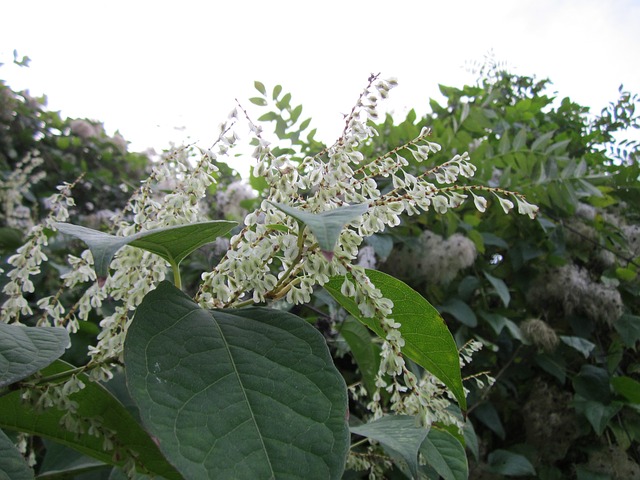
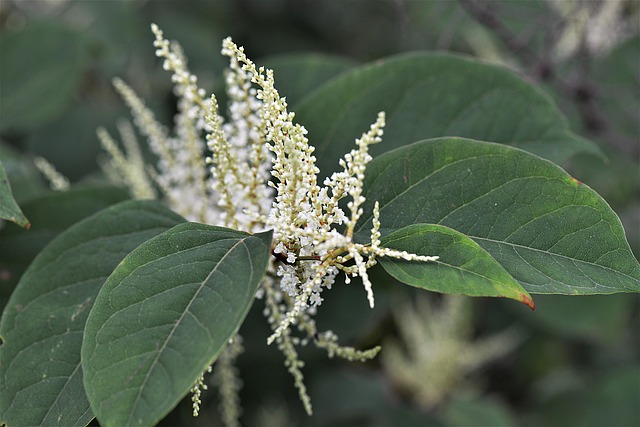
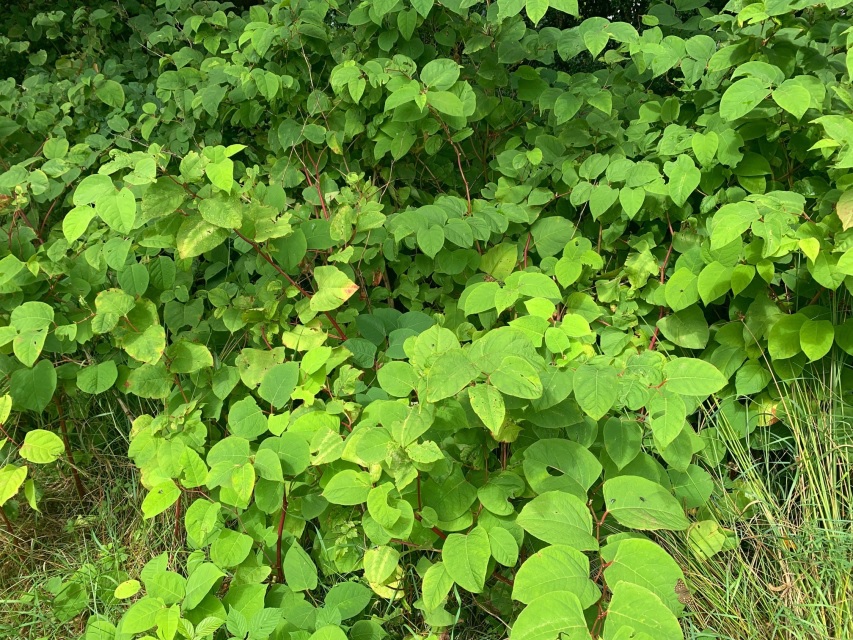
When knotweed emerges in the spring, it looks like reddish-purple shoots (the thickness of asparagus). Often, as the stems develop they begin to take on a more dense, hollow appearance like bamboo. As you look along the length of the zig-zag stem you will see the iconic love-heart shaped leaves. During the warmer periods you might even see some pretty little white flowers, but don't be fooled! they're not a pretty garden feature to be enjoyed! You can see close up images of all these knotweed features over on our identification page.

There are a handful of plants that are often mistaken for Japanese knotweed, so this is worth bearing in mind too as you determine whether or not you have Japanese knotweed. 

  • Bindweed
  • Russian Vine
  • Bamboo
  • Broadleaf Dock

All of these are knotweed impersonators, so keep your eyes peeled for these as you survey your garden.

Spotting Knotweed Damage

Knotweed is a quick-growing plant and can grow up to 10cm in a single day during the height of the growing season! It's capable of causing damage to buildings and structures as it targets weak points and forces its way into foundations and up drainpipes. Within a matter of weeks, it can ravage a garden, rip its way through a brick wall or destroy a wooden fence. It usually has a vast network of underground rhizomes that shoot off smaller plants all over your garden, so if you suspect you have knotweed, it's likely it will pop up in more places than one.

What to do if you think you have knotweed?

So, if you think you've spotted this ravenous Japanese plant in your garden, don't hesitate to give us a call! We specialise in identifying, treating and eradicating Japanese knotweed. 

If you think that a neighbour has Japanese knotweed that might encroach on your property and cause damage, then we can also help you through your legal case. We offer a professional expert witness service that will help protect you and your home in the worst-case scenario. 

Request a FREE Survey Now >


So, if you are asking "do I have Japanese knotweed", we hope that this blog has helped to make things a little clearer for you and provided you with the information that you need to sort out your potential infestation!